


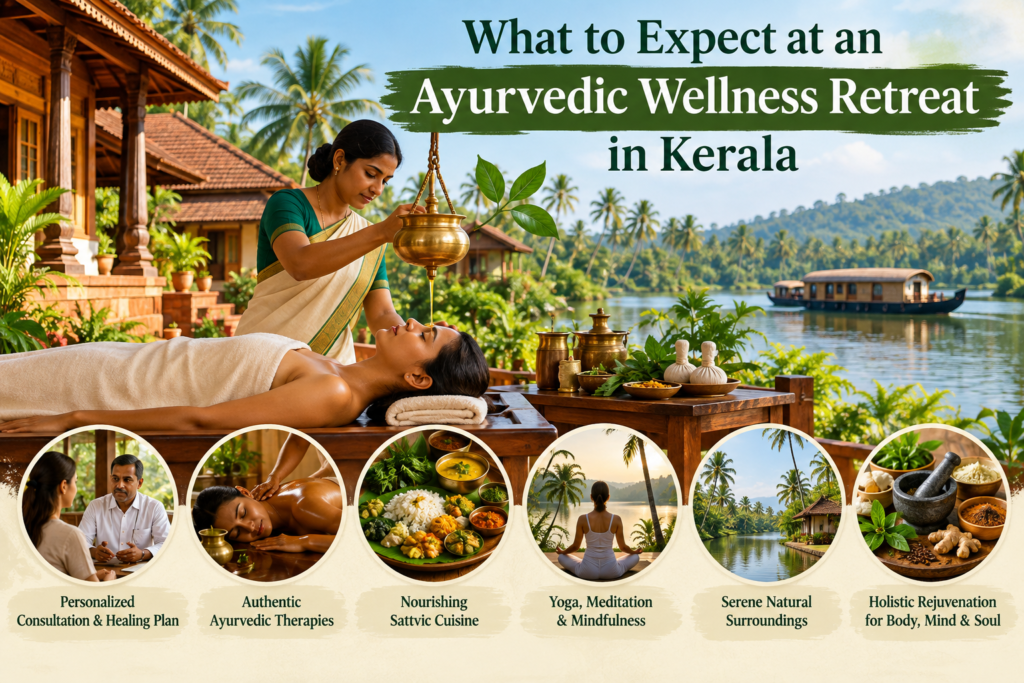
Most people book an Ayurvedic retreat in Kerala with one of two expectations. The first is a luxury spa holiday with Indian branding. The second is something transformative and vaguely spiritual that they cannot quite define. Neither is entirely wrong, but neither is quite right either, and the gap between expectation and reality is where most retreat disappointments live.
Kerala is one of the few places in the world where Ayurveda is practised as a complete medical system rather than a collection of relaxation treatments. The tradition here is genuinely old, the practitioners are formally trained, and the approach—when you find the right centre—is clinical in a way that surprises people expecting incense and ambient music. Understanding what a serious retreat involves before you book makes the experience much more useful.
The Consultation Comes First
Every legitimate Kerala Ayurveda package begins with a physician consultation, not a treatment menu. An Ayurvedic doctor will assess your prakriti — your constitutional type — through pulse reading, physical examination, and a detailed intake conversation covering diet, sleep, digestion, stress, and medical history. This assessment determines the treatments you receive, the diet you follow during the stay, and the herbal preparations prescribed alongside the therapies. This is not a formality. At a serious centre, the consultation can take an hour or more. The treatments recommended for one guest may be entirely different from those recommended for another staying in the same room category. If a retreat skips this step and hands you a treatment menu to choose from, that is a reliable signal that what is on offer is spa tourism rather than Ayurveda.
The Treatments Themselves
The most commonly offered treatments fall into a few broad categories, and it helps to know what they involve before you encounter them on a schedule. Abhyanga is a full-body oil massage performed by one or two therapists working in synchronised strokes with warm medicated oil. It is deeply relaxing, lasts between 45 and 60 minutes, and is typically the foundation treatment in most programmes. The physician chooses the oil based on their assessment, not guest preference.
Shirodhara involves a continuous stream of warm oil poured over the forehead from a suspended vessel for 30 to 45 minutes. It is used primarily for stress, sleep disorders, and nervous system complaints. Many guests find it profoundly calming; some find the sensation disorienting initially. It is not painful, but it is unusual, and knowing what to expect beforehand makes the first session much easier.
Panchakarma is the intensive detoxification programme that serious Kerala Ayurveda packages are built around. It involves a preparatory phase of internal oleation (consuming ghee in increasing quantities over several days), followed by a series of purification therapies, including medicated enemas, nasal oil administration, and, in some cases, therapeutic purgation. Panchakarma is not a weekend treatment. A proper course runs at least seven days and ideally 14 to 21. It requires dietary restriction, limited physical activity, and a willingness to follow the physician’s instructions without modification. People who complete it properly often describe it as one of the most significant health experiences of their lives. People who have done a shortened commercial version tend to feel they had a pleasant holiday.
The Diet Is Part of the Treatment
Every reputable retreat controls the diet during the programme. Meals are typically light, freshly prepared, and designed around the guest’s dosha assessment. Alcohol is not permitted during any serious Ayurvedic programme. Coffee and processed foods are usually restricted. Meals are often taken at fixed times, and eating outside those times is discouraged.
This is the part of a retreat that guests least anticipate and struggle with most, particularly in the first two or three days. The food at good Ayurvedic centres is genuinely good — Kerala cooking at its most considered, but it is not hotel food, and it is not designed around preference. It is designed around the treatment.
If a centre allows unrestricted alcohol and a full à la carte menu throughout a Panchakarma programme, those are incompatible things. The Panchakarma is not happening.
Choosing Between a Medical Centre and a Wellness Resort
This is the most important decision in the booking process, and the distinction is not always clear from the marketing.
| Medical Ayurvedic Centre | Luxury Wellness Resort | |
| What it is | A clinical facility where Ayurveda is practised as a medical system | A high-end hospitality property offering genuine but non-intensive Ayurvedic treatments |
| Practitioners | Qualified Ayurvedic physicians (BAMS degree or above) | Qualified therapists; physician oversight varies by property |
| Programme design | Built around clinical outcome and classical protocols | Built around guest experience |
| Accommodation | Comfortable and clean; not luxury in the conventional sense | Full resort facilities, pools, premium rooms |
| Diet | Strictly therapeutic; controlled throughout the stay | Generally healthy; more flexibility allowed |
| Best for | Specific health objectives, serious Panchakarma, longer stays | Combining Kerala holiday packages with authentic but non-intensive Ayurvedic exposure |
| Examples | Arya Vaidya Sala (Kottakkal), Somatheeram (Thiruvananthapuram), Vaidyagrama (near Coimbatore) | CGH Earth’s SwaSwara, Neeleshwar Hermitage, Niraamaya Retreats |
Practical Things Worth Knowing
- Go during the monsoon if you can: June to August is the best season for Ayurvedic treatment in Kerala. Ayurvedic texts say the body’s pores are most open and receptive to oil therapies during the rainy season. Most serious centres also offer their best pricing and most attentive service when general tourism is at its lowest — several run monsoon-specific packages at 20 to 30 percent below peak season rates.
- Pack old clothing: Medicated oils stain fabric permanently, and treatments involve significant oil application to both body and hair. Most centres provide treatment garments, but guests who arrive expecting a spa-weekend wardrobe tend to regret it.
- Expect the first two to three days to be the hardest: Dietary adjustment, early rising, limited stimulation, and the physical effects of detoxification can produce fatigue, mild headaches, or emotional sensitivity. This is normal and typically passes. Knowing this in advance is considerably more useful than being surprised by it on day two.
- Five days is the minimum worth doing: A weekend Ayurvedic experience is pleasant and genuinely relaxing, but it is not a health programme. If health is the real objective, plan for at least seven nights. Fourteen is considerably more effective.
The Honest Version
An Ayurvedic retreat in Kerala, when chosen well and taken seriously, tends to produce outcomes guests did not entirely anticipate — improvements in sleep, digestion, energy, and stress that become apparent in the weeks after the retreat rather than during it. The tradition has a few thousand years of refinement behind it, and the Kerala lineage of practice is among the most credible versions of it available anywhere. It is not a spa. It is not a holiday in the conventional sense. It asks something of you in return for what it offers. Most people who do it properly find that a reasonable trade.