
Mumbai Ahmedabad Mumbai Bullet Train Update 2026
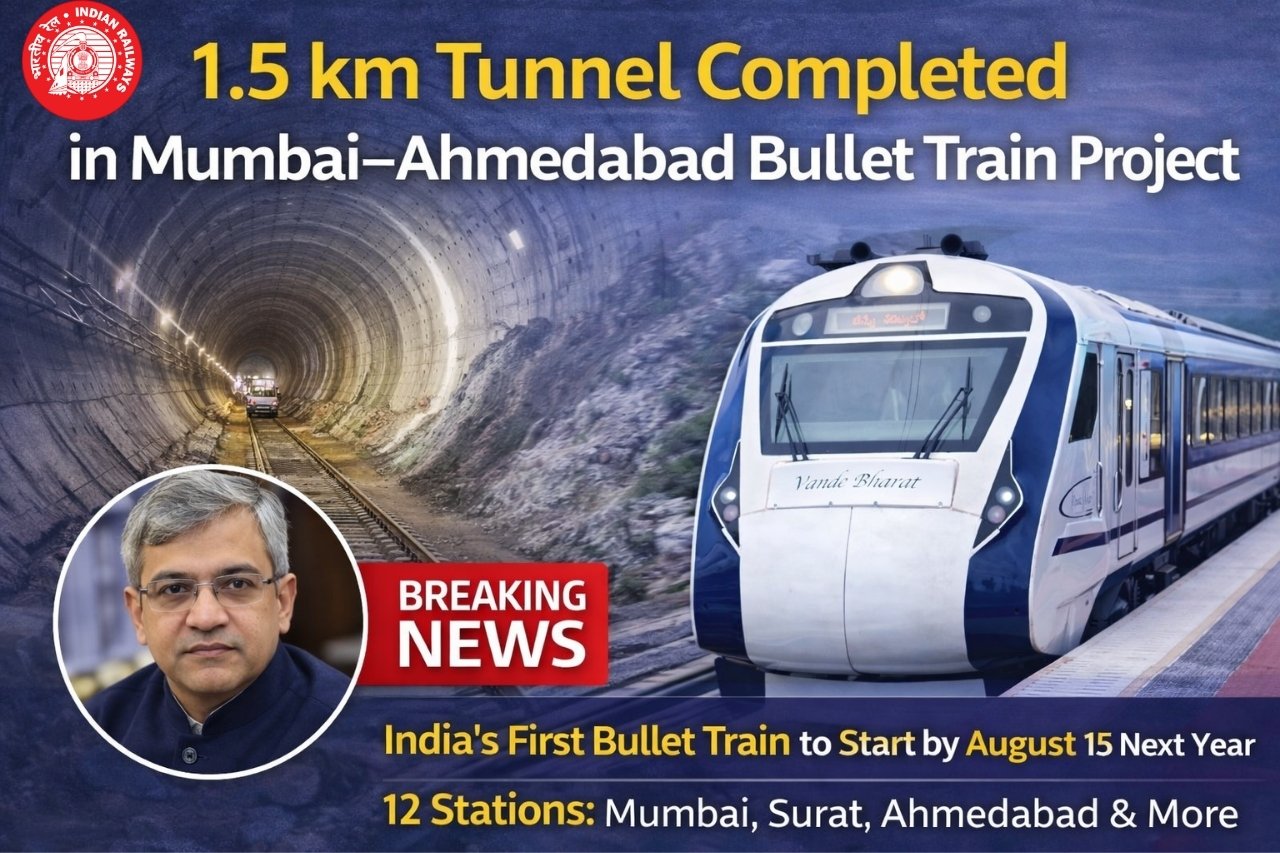
Indian Railways News: The Mumbai Ahmedabad bullet train project has reached a significant construction milestone with the successful breakthrough of a 1.5-kilometre tunnel in Maharashtra. Railway Minister Ashwini Vaishnaw announced the development during the High-Speed Tunnel Breakthrough Programme held at Palghar via video conferencing.
1.5 km Tunnel Breakthrough Between Virar and Boisar
According to the Railway Minister, the newly completed tunnel connects Virar and Boisar in Palghar district of Maharashtra. This marks the second mountain tunnel breakthrough in the state for India’s first high-speed rail corridor. The tunnel is part of a complex engineering effort that includes seven mountain tunnels and one undersea tunnel along the route.
Mr Vaishnaw highlighted that tunnel construction is progressing steadily despite challenging terrain and that modern technology is being used to ensure safety and precision.
Mumbai Ahmedabad Bullet Train to Be Ready by August 15 Next Year
Providing an important update on the project timeline, the Railway Minister said that India’s first bullet train is expected to be ready by August 15 next year. The Mumbai Ahmedabad High-Speed Rail Corridor will be commissioned in a phased manner, with the first operational section likely between Surat and Bilimora.
Construction work on the project began in April 2021, and authorities are confident of meeting the planned deadlines.
Affordable High Speed Travel for the Middle Class
Ashwini Vaishnaw stated that the bullet train will offer a fast, safe, and affordable travel option, especially for middle-class passengers. Once operational, the service will significantly reduce travel time between Mumbai and Ahmedabad while providing world-class comfort and reliability.
508 km Corridor with 12 Major Stations
The Mumbai Ahmedabad bullet train project spans 508 kilometres and will include 12 stations across Maharashtra and Gujarat. These stations are:
- Sabarmati
- Ahmedabad
- Anand
- Vadodara
- Bharuch
- Surat
- Bilimora
- Vapi
- Boisar
- Virar
- Thane
- Mumbai
The corridor is expected to boost regional connectivity, economic growth, and modern rail infrastructure in India.
A Landmark Project for Indian Railways
The successful tunnel breakthrough is another step forward in transforming India’s rail network with high-speed rail technology. The Mumbai Ahmedabad bullet train project remains one of the most ambitious railway infrastructure projects in the country and is closely watched as a model for future bullet train corridors.
FAQs: Mumbai Ahmedabad Bullet Train Project
Q1. What is the latest update on the Mumbai–Ahmedabad bullet train project?
Indian Railways has successfully completed a 1.5 km tunnel breakthrough between Virar and Boisar in Maharashtra, marking a major construction milestone.
Q2. Who announced the tunnel breakthrough achievement?
Railway Minister Ashwini Vaishnaw announced the achievement during the High-Speed Tunnel Breakthrough Programme in Palghar, Maharashtra.
Q3. How many tunnels are part of the Mumbai–Ahmedabad bullet train project?
The project includes seven mountain tunnels and one sea tunnel, making it one of India’s most complex railway infrastructure projects.
Q4. When will India’s first bullet train start operations?
According to the Railway Minister, the first phase of the bullet train is expected to be ready by 15 August next year, with phased commissioning.
Q5. Which section will become operational first?
The Surat–Bilimora stretch will be the first section to begin high-speed bullet train operations.
Q6. What is the total length of the Mumbai–Ahmedabad bullet train corridor?
The corridor spans approximately 508 kilometres.
Q7. How many stations will the bullet train corridor have?
There will be 12 stations, including Mumbai, Thane, Virar, Boisar, Vapi, Surat, Vadodara, Ahmedabad, and Sabarmati.
Q8. Why is the bullet train important for Indian Railways?
The bullet train will offer fast, reliable, and affordable high-speed travel, especially benefiting the middle class and boosting regional connectivity.
