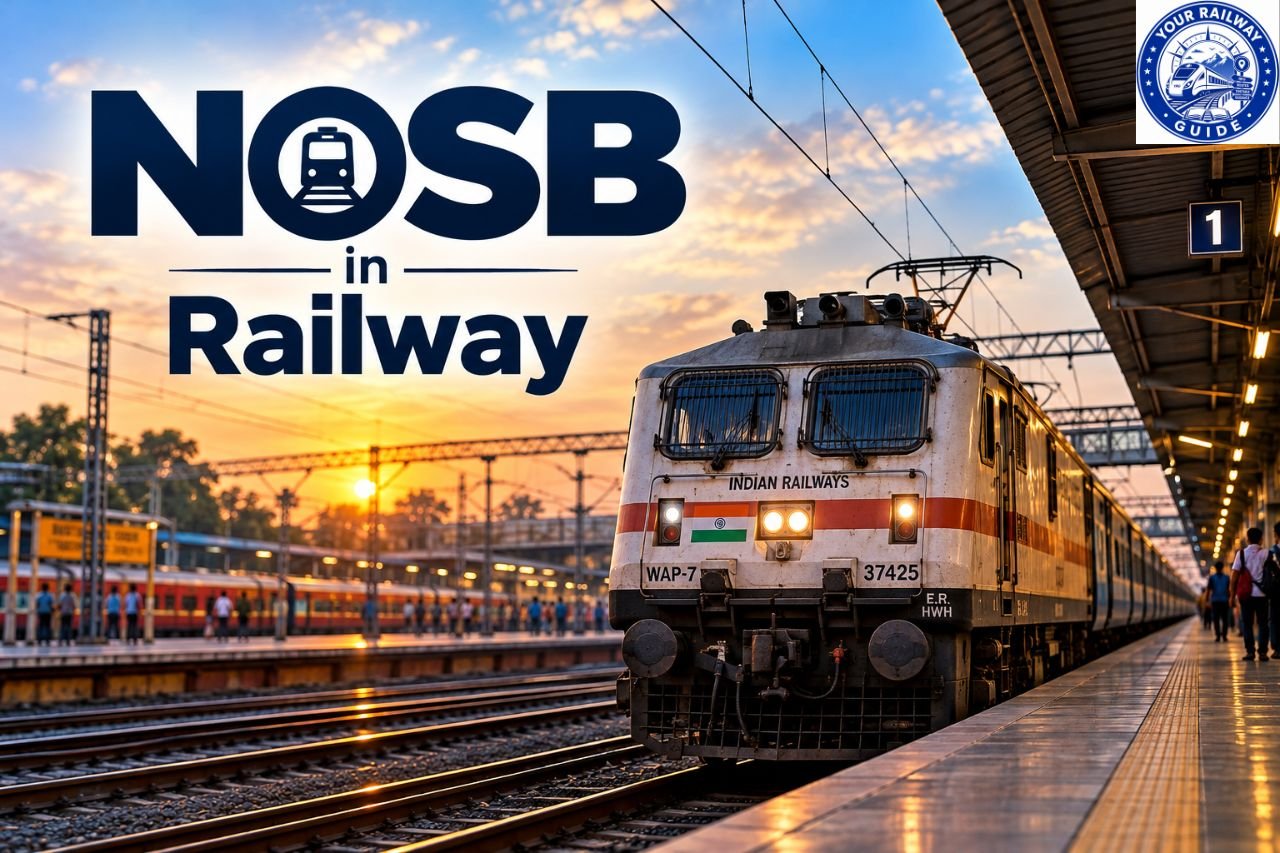
NOSB stands for No Seat or Berth, and it appears when a passenger, typically a child, is travelling without a separately reserved seat or berth. During train ticket reservation, this option allows eligible children to travel without occupying an individual berth, while the fare is calculated according to the applicable railway rules. Understanding NOSB is important for families because selecting this option means the child will not receive a separate seat or sleeping berth for the journey.
The scale of railway travel in India also makes these reservation details relevant to millions of families. According to the Ministry of Railways, Indian Railways carried 741 crore passengers during the financial year 2025-26, which was 3.54% higher than the 716 crore passengers recorded in 2024-25. With such a large passenger base travelling across the country, understanding terms such as NOSB can help families select the appropriate reservation option and avoid confusion about whether a child has been allotted a separate seat or berth.
What Does NOSB Mean in Railway?
NOSB stands for No Seat/Berth. It is used when a child is travelling with an accompanying adult but the passenger does not require a separate seat or berth for that child. Indian Railways provides a specific option for children aged 5 years and below 12 years where a berth is not required.
The railway reservation form specifically provides for this arrangement. It instructs passengers to write NOSB when booking a child in this age group without requesting a separate berth. This means NOSB is not a waiting-list status or a problem with the ticket. It simply indicates that the child is travelling without a separately allotted seat or berth.
When Is NOSB Used?
NOSB is relevant when a child is between 5 years and below 12 years of age and the accompanying passenger chooses not to request a separate berth. The reservation rules specifically recognise the option of booking a child in this manner.
This can be useful for families who are comfortable having a young child share the available accommodation with an accompanying adult. For example, parents travelling with a six-year-old child may choose not to request an additional berth. In such a case, the reservation details can reflect the NOSB option rather than showing an independently assigned berth for the child.
It is worth remembering that the age category matters. NOSB should not be interpreted as a general facility available to every child passenger. The railway’s reservation instructions specifically refer to children aged 5 years and below 12 years for the no-berth option.
Is NOSB the Same as a Confirmed Seat?
No. NOSB should not be confused with a confirmed seat or berth. A passenger with a confirmed reservation normally receives an accommodation detail according to the class and reservation arrangement. NOSB, on the other hand, indicates that no separate seat or berth has been requested for the eligible child.
This distinction becomes particularly useful when families look at their booking details after completing IRCTC train-ticket booking. A parent may see a child listed on the reservation while noticing that the child does not have an independently assigned berth number. That does not automatically mean that the booking has a problem.
What Happens to a Child Under Five?
Indian Railways has separate provisions for children below five years. Railway reservation information states that no separate seat or berth is allotted for a child below five years of age, although the child’s name, age and sex are to be mentioned in the reservation information and provided to the TTE.
This is different from the NOSB provision discussed above because the railway’s reservation form specifically addresses children aged 5 years and below 12 years when a separate berth is not required.
This makes the no-berth option useful for families who do not need an additional berth for a young child. However, parents should not assume that selecting NOSB means there is no fare. The reservation system calculates the applicable amount based on the passenger’s age and the accommodation option selected. When a child in this age group travels without a separate berth or seat, the applicable railway rules provide for a 50% fare of the adult fare. If the parent or guardian chooses a separate berth or seat, the child is charged the applicable fare for that accommodation under the railway’s child-fare rules.
NOSB vs. Children Under Five: What Is the Difference?
The two situations are easy to confuse, but the age and fare rules are different:
| Child’s age | Separate berth/seat not required | Separate berth/seat required |
| Below 5 years | No fare is charged | Applicable fare is charged |
| 5 to below 12 years | 50% of applicable adult fare | Applicable child fare for a separate berth/seat |
How NOSB Can Appear in a Family Booking
Imagine a family booking a sleeper-class journey for two adults and a seven-year-old child. The parents may decide that they do not need a separate berth for the child. When the reservation is made under the applicable rules, the child can be booked using the no-berth option, with NOSB indicating that separate accommodation has not been requested.
The practical point is simple: the child can be included in the reservation without interpreting the absence of an individual berth number as an error. Families should still check the final passenger details and reservation status carefully after booking, because the information shown on the ticket reflects the reservation choices made for each passenger.
Why Consider Goibibo for Family Train Travel?
When travelling by train with children, having booking and journey information accessible in one place can make planning easier for families. Goibibo allows travellers to search trains, check available classes and manage train bookings through its website and app. Its train services also provide PNR information, coach and berth details when available, along with live train-status information for keeping track of the journey.
Does NOSB Affect PNR Status?
NOSB itself is not a separate PNR status such as CNF, RAC or WL. The PNR represents the overall booking record, while passenger-level information can show different details depending on the reservation made for each traveller.
For this reason, passengers should look at both the overall PNR status and individual passenger details. If a child has been booked under the no-berth option, the absence of a separate berth should be understood in the context of that booking choice rather than treated as a waiting-list indication.
Things Parents Should Check Before Booking
Parents travelling with children should enter the child’s age accurately because railway reservation provisions differ according to age. They should also decide before completing the booking whether the child needs separate accommodation. If a separate berth is not required for a child covered by the applicable age category, the NOSB option can be relevant.
After booking, checking the passenger names, ages, class, journey date and reservation status is a sensible final step. Families should also keep their ticket and required travel documents accessible during the journey. This small check can prevent unnecessary confusion at the station or while travelling.
Understanding NOSB Before Your Journey
NOSB is essentially a simple reservation notation for an eligible child travelling without a separate seat or berth. It does not mean that the booking is waiting, cancelled or incomplete. Indian Railways’ reservation documentation specifically recognises the no-berth option for children aged 5 years and below 12 years.
For parents, the main thing is to understand the child’s age category and the accommodation choice made during reservation. Once these details are clear, seeing NOSB in a family booking becomes much easier to understand and verify.
