Traveling by train is one of the most comfortable and economical ways to explore India. For long-distance journeys, Indian Railways provides sleeping accommodations known as berths. When booking a ticket, passengers often come across abbreviations such as LB, MB, UB, SL, and SU. While these codes appear simple, each berth offers a different level of comfort, privacy, accessibility, and convenience.
Choosing the right berth can significantly improve your travel experience. Senior citizens may prioritize easy access, families may seek convenience, while solo travelers often prefer privacy. Understanding the advantages and disadvantages of each berth type can help passengers make informed booking decisions.
In this guide, we will explore all major berth types in Indian Railways, their features, benefits, drawbacks, and suitability for different kinds of travelers.
Understanding Berth Layout in Indian Railways
In Sleeper Class and AC 3-Tier coaches, berths are arranged in bays consisting of six berths:
- Lower Berth (LB)
- Middle Berth (MB)
- Upper Berth (UB)
Along the corridor side, there are two additional berths:
- Side Lower Berth (SL)
- Side Upper Berth (SU)
Together, these berths maximize passenger capacity while ensuring sleeping arrangements for reserved travelers.
1. Lower Berth (LB)
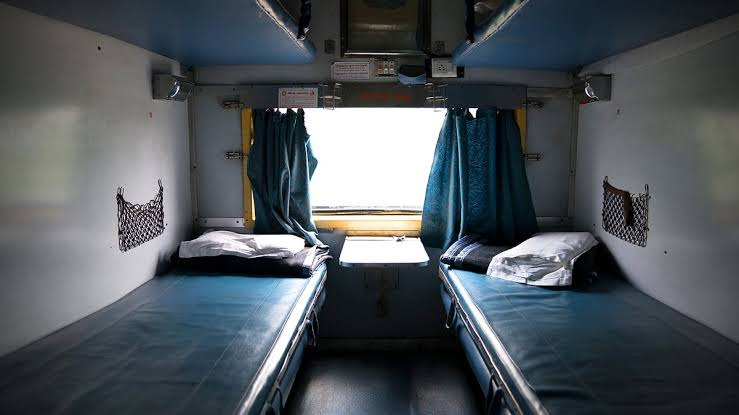
The Lower Berth is located at the bottom of the main compartment. It functions as a seating area during the day and a sleeping berth during the night. Because it requires no climbing, it is one of the most sought-after berths among passengers.
Advantages and Disadvantages
| Advantages | Disadvantages |
|---|---|
| Easy to access without climbing | Less privacy than upper berths |
| Ideal for senior citizens and differently-abled passengers | Other passengers may sit here during the day |
| Easy access to luggage stored underneath | More foot traffic nearby |
| Convenient for families traveling with children | Can be noisy during daytime |
| Comfortable for long journeys | Limited personal space until bedtime |
Best For
- Senior citizens
- Families with children
- Pregnant women
- Passengers carrying heavy luggage
2. Middle Berth (MB)
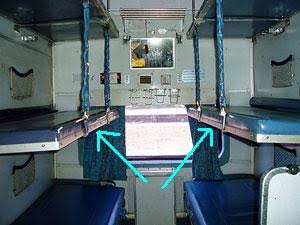
The Middle Berth is positioned between the lower and upper berths. During daytime, it remains folded against the wall and is opened only at night for sleeping. It is available only in Sleeper Class and AC 3-Tier coaches.
Advantages and Disadvantages
| Advantages | Disadvantages |
|---|---|
| Provides a dedicated sleeping space | Cannot be used during daytime |
| Less affected by corridor movement | Limited headroom |
| Offers moderate privacy | Requires cooperation with lower berth passenger |
| Usually available when preferred berths are not | Not comfortable for tall passengers |
| Suitable for overnight journeys | Often considered the least preferred berth |
Best For
- Adult passengers
- Budget-conscious travelers
- Overnight journeys
3. Upper Berth (UB)
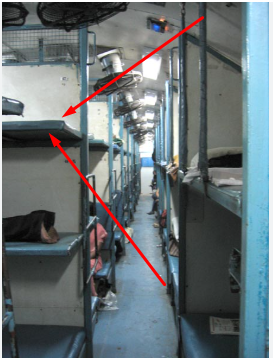
The Upper Berth is located at the top of the main compartment. It is popular among passengers who prefer privacy and uninterrupted sleep. Unlike the middle berth, it can be used throughout the journey.
Advantages and Disadvantages
| Advantages | Disadvantages |
|---|---|
| High level of privacy | Requires climbing |
| Can be occupied at any time | Difficult for elderly passengers |
| Minimal disturbance from co-passengers | Limited mobility |
| Ideal for uninterrupted sleep | Accessing luggage can be inconvenient |
| Suitable for long journeys | Frequent climbing can become tiring |
Best For
- Solo travelers
- Students
- Frequent train travelers
- Privacy seekers
4. Side Lower Berth (SL)
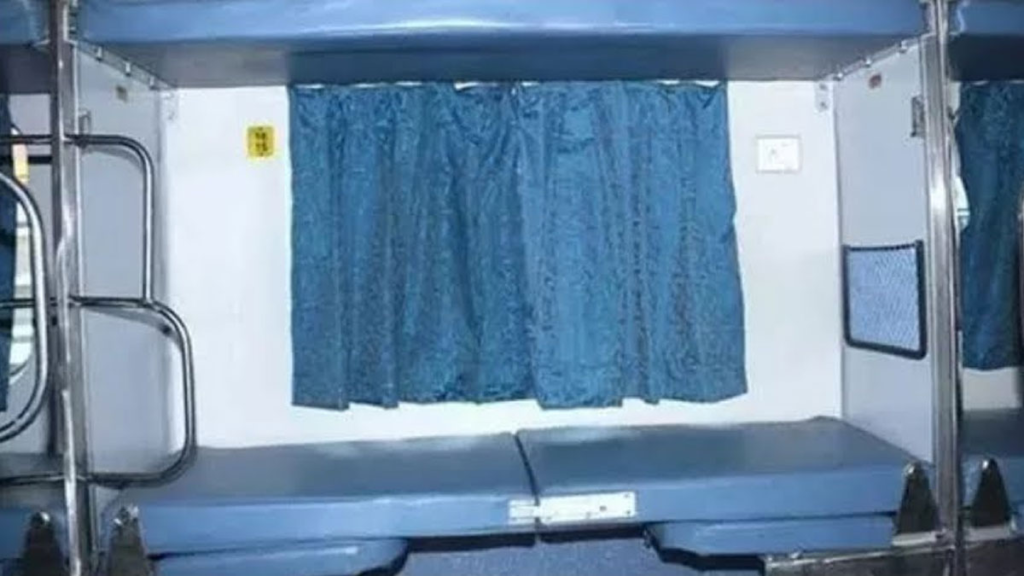
The Side Lower Berth is located along the coach corridor. It serves as a seat during the day and converts into a sleeping berth at night. Many passengers choose it for its accessibility and convenience.
Advantages and Disadvantages
| Advantages | Disadvantages |
|---|---|
| Easy access to the aisle | Narrower than regular lower berth |
| Convenient for short-distance travel | Less privacy |
| No climbing required | Constant movement of passengers nearby |
| Easy access to washrooms and exits | Exposure to light and noise |
| Suitable for solo travelers | Can feel cramped on long journeys |
Best For
- Short-distance passengers
- Solo travelers
- Passengers who need frequent movement
5. Side Upper Berth (SU)
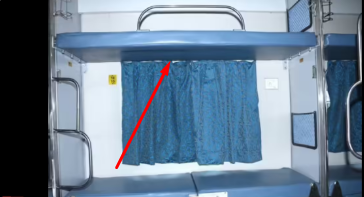
The Side Upper Berth is positioned above the Side Lower Berth. It is widely regarded as one of the best berths for solo travelers due to the privacy it offers.
Advantages and Disadvantages
| Advantages | Disadvantages |
|---|---|
| Excellent privacy | Requires climbing |
| Minimal interference from co-passengers | Limited headroom |
| Comfortable for uninterrupted sleep | Not suitable for elderly passengers |
| No need to share seating space during daytime | Accessing luggage can be difficult |
| Preferred by experienced travelers | Slightly narrower than regular upper berth |
Best For
- Solo travelers
- Students
- Young passengers
- Travelers seeking privacy
Which Berth Is the Best?
The ideal berth depends on your travel needs.
| Passenger Type | Recommended Berth |
|---|---|
| Senior Citizens | Lower Berth (LB) |
| Families with Children | Lower Berth (LB) |
| Pregnant Women | Lower Berth (LB) |
| Solo Travelers | Side Upper (SU) or Upper Berth (UB) |
| Students | Upper Berth (UB) or Side Upper (SU) |
| Short-Distance Travelers | Side Lower (SL) |
| Passengers Carrying Heavy Luggage | Lower Berth (LB) |
Berth Preference Tips While Booking
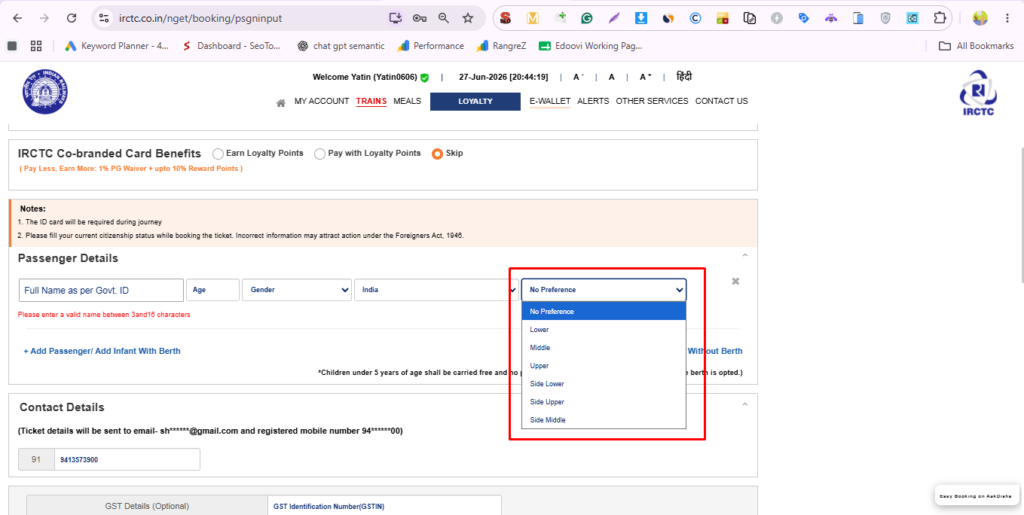
When reserving tickets through IRCTC, passengers can select a berth preference. Although berth allocation depends on availability, choosing a preference increases the chances of receiving a suitable berth.
Some useful tips include:
- Book tickets well in advance.
- Select your berth preference during reservation.
- Senior citizens should opt for lower berth preference.
- Families should book tickets together to increase the chances of getting nearby berths.
- Solo travelers may prefer Upper or Side Upper berths for privacy.
How to Select Birth Preference In IRCTC.
Yes, we can select the option what birth we want. If there is good amount of seat vacant, there is higher chances to get the seat we want, other wise its on luck which seats allocated to you.
Frequently Asked Questions
Which berth is safest in Indian Railways?
The Upper Berth and Side Upper Berth are generally considered safer because they experience less passenger movement and offer greater privacy.
Which berth is best for senior citizens?
The Lower Berth is the best option because it does not require climbing and provides easy access.
Is Side Upper better than Upper Berth?
Many solo travelers prefer Side Upper because it offers greater privacy and fewer disturbances than the regular Upper Berth.
Why is the Middle Berth less popular?
The Middle Berth cannot be used during daytime and offers limited space, making it less convenient than other berth types.
Conclusion
The berth assigned to you can have a significant impact on your railway journey. While the Lower Berth offers unmatched accessibility and convenience, the Upper and Side Upper berths provide greater privacy and uninterrupted rest. The Side Lower berth is ideal for passengers who value mobility, whereas the Middle Berth serves as a practical space-saving solution in high-capacity coaches.
Understanding the strengths and limitations of each berth type allows passengers to make better booking decisions and enjoy a more comfortable travel experience. Whether you are a senior citizen, a family traveler, or a solo adventurer, choosing the right berth can make your train journey far more enjoyable.
