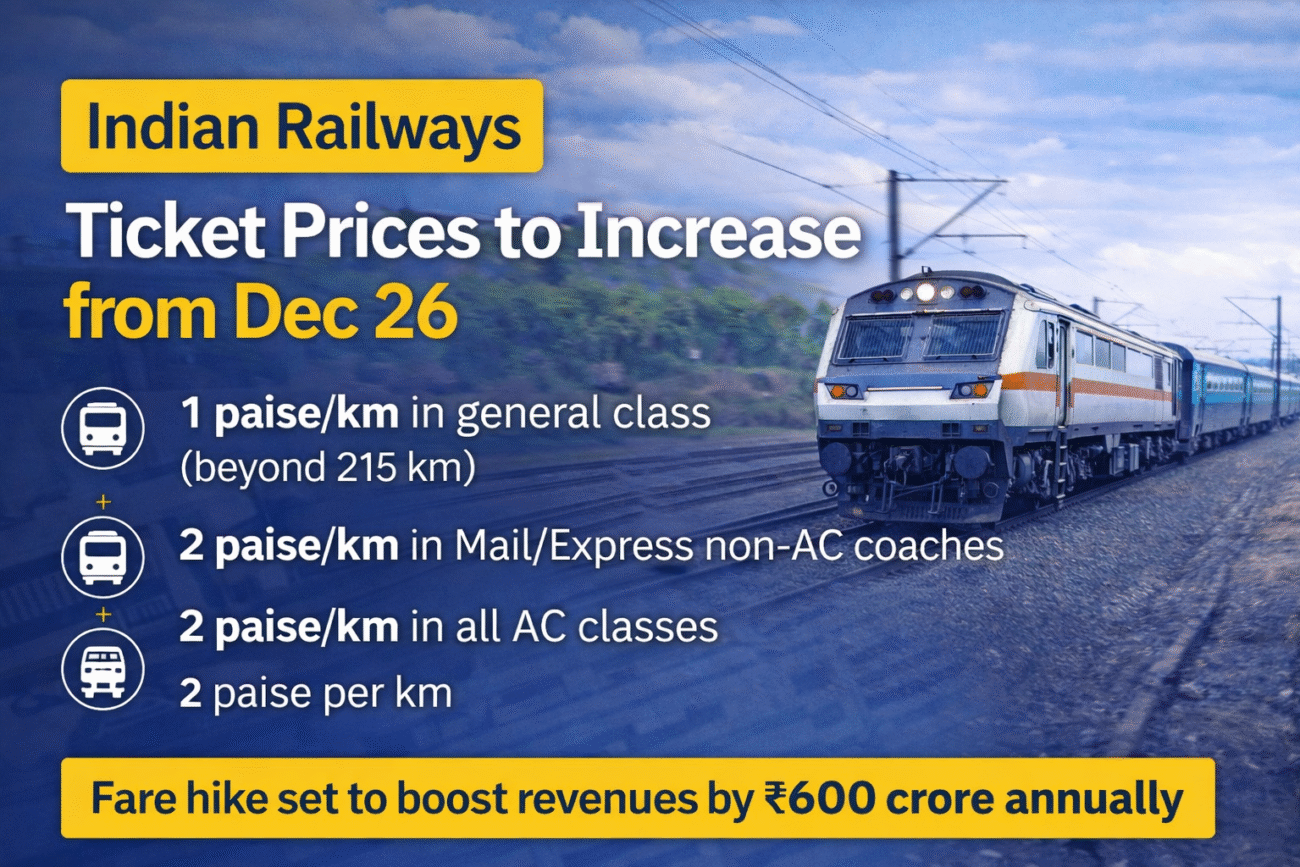
Passengers planning long-distance train journeys should prepare for slightly higher fares. Indian Railways has announced a ticket price hike that will come into effect from December 26, a move expected to generate an additional ₹600 crore in annual revenue.
What Changes From December 26
The fare revision will mainly impact long-distance and Mail Express trains, while suburban and short-distance travellers will see no change.
Key fare updates include:
- General class tickets up to 215 km will remain unchanged
- Journeys beyond 215 km will cost 1 paise per km extra
- Non AC Mail and Express trains will see a hike of 2 paise per km
- All air-conditioned classes will also become costlier by 2 paise per km
For example, a 500 km journey in a non AC coach will now cost approximately ₹10 more than before.
Suburban and Short Routes Unaffected
The Railways has clarified that suburban train services and short-distance travel will not be impacted by this fare increase. This ensures daily commuters and short-route passengers are protected from the hike.
Why Indian Railways Increased Fares
According to officials, Indian Railways has significantly expanded its network and workforce over the past decade. Rising operational costs have made fare rationalisation necessary.
Key cost pressures include:
- Manpower expenses reaching ₹1,15,000 crore
- Pension liabilities amounting to ₹60,000 crore
- Total operational costs touching ₹2.63 lakh crore in the 2024–25 financial year
To balance these rising expenses, the Railways is focusing on higher cargo loading and moderate passenger fare adjustments.
Previous Fare Revisions
This is not the first fare hike in recent years:
- July 2024 saw a hike of 1 paise per km for non AC classes and 2 paise per km for AC classes
- January 1, 2020, marked the last major revision, with sleeper and AC fares increased by up to 4 paise per km
What Passengers Should Know
While the fare increase is modest, passengers traveling long distances should check updated ticket prices before booking. The Railways maintains that the revision is essential to ensure financial sustainability and improved services across the network.
